
Table of Contents
- What Is a Dental Bridge?
- Why Should a Missing Tooth Not Be Left Untreated?
- What Are the Types of Dental Bridges?
- How Is a Dental Bridge Made? Step-by-Step Process
- Which Materials Are Used in a Bridge?
- Implant or Bridge? Which Option Stands Out in Which Situation?
- Advantages and Disadvantages of Dental Bridges
- Dental Bridge Care: How to Clean Under the Bridge?
- Frequently Asked Questions About Dental Bridges
What Is a Dental Bridge?
A dental bridge is a type of fixed prosthesis that fills the gap created by one or more missing teeth by taking support from the natural teeth on either side of the gap or from implants. It takes its name from bridges in architecture: a body placed between two solid abutments fills the place of the missing tooth and transfers the chewing load to the supporting teeth. Unlike removable dentures, a bridge is fixed in the mouth with a special cement; it is not taken in and out and offers a feeling of use close to that of a natural tooth.
The bridge is one of the fixed solutions with the longest history among prosthetic treatments, and today it can be produced with different materials ranging from metal-supported porcelain to all-ceramic and zirconia-based systems. Which material and which bridge design is suitable is determined by evaluating the location of the gap, the condition of the supporting teeth, the chewing force and the aesthetic expectation together.
In this guide you will find out for whom a dental bridge may be suitable, its types, the stages of its construction, the differences between a bridge and an implant, and care recommendations that will extend the life of your bridge.
Why Should a Missing Tooth Not Be Left Untreated?
Even the absence of a single tooth is not just an aesthetic problem. The mouth is a dynamic system that tries to reorganise itself when its balance is disturbed; when the gap remains untreated for a long time, the neighbouring and opposing teeth may begin to move towards this space.
Moreover, the longer the time that passes after the loss, the more established these changes become and the more complicated the treatment plan can get; for example, a tooth that has tilted into the gap may first need to be uprighted orthodontically before it can support a bridge. For this reason, planning with your dentist early in the post-extraction period how the gap will be restored simplifies both the duration and the scope of treatment. You can find detailed information about the healing process of the extraction site in our article on care after tooth extraction.
When a missing tooth gap remains untreated for a long time, the following problems may be seen:
- Neighbouring teeth may tilt into the gap; the alignment of the teeth and the bite relationship may deteriorate over time.
- The tooth in the opposite jaw may start to over-erupt because it cannot find contact.
- The chewing load may be distributed unevenly on the remaining teeth, increasing the risk of wear and cracks.
- Areas that are difficult to clean form between tilted teeth; the likelihood of decay and gum problems increases.
- In missing front teeth, speech sounds and the aesthetics of the smile can be negatively affected.
What Are the Types of Dental Bridges?
Not every missing tooth situation is solved with the same bridge design. The location and width of the gap, the health of the supporting teeth and the bone structure determine which type of bridge is suitable. Which design is appropriate depends not only on the width of the gap but also on the root length of the supporting teeth, the bone support and the health of the gums. For this reason, it is not possible to decide on the type of bridge without an examination and X-ray evaluation. Today, four main bridge designs can be mentioned:
- Traditional bridge: The teeth on both sides of the gap are shaped for crowns, and the artificial tooth body is connected to these two crowns. It is the most commonly applied and best-known type of bridge.
- Cantilever bridge: Support is taken from the tooth on only one side of the gap. It can be considered in limited areas where the chewing load is low and where only one-sided support is available.
- Maryland bridge: It is held in place by metal or ceramic wings bonded to the back surface of the neighbouring teeth. Minimal or no grinding of the teeth is an important advantage; however, since its retention can be more limited than a traditional bridge, it is usually preferred for single missing teeth in the front region.
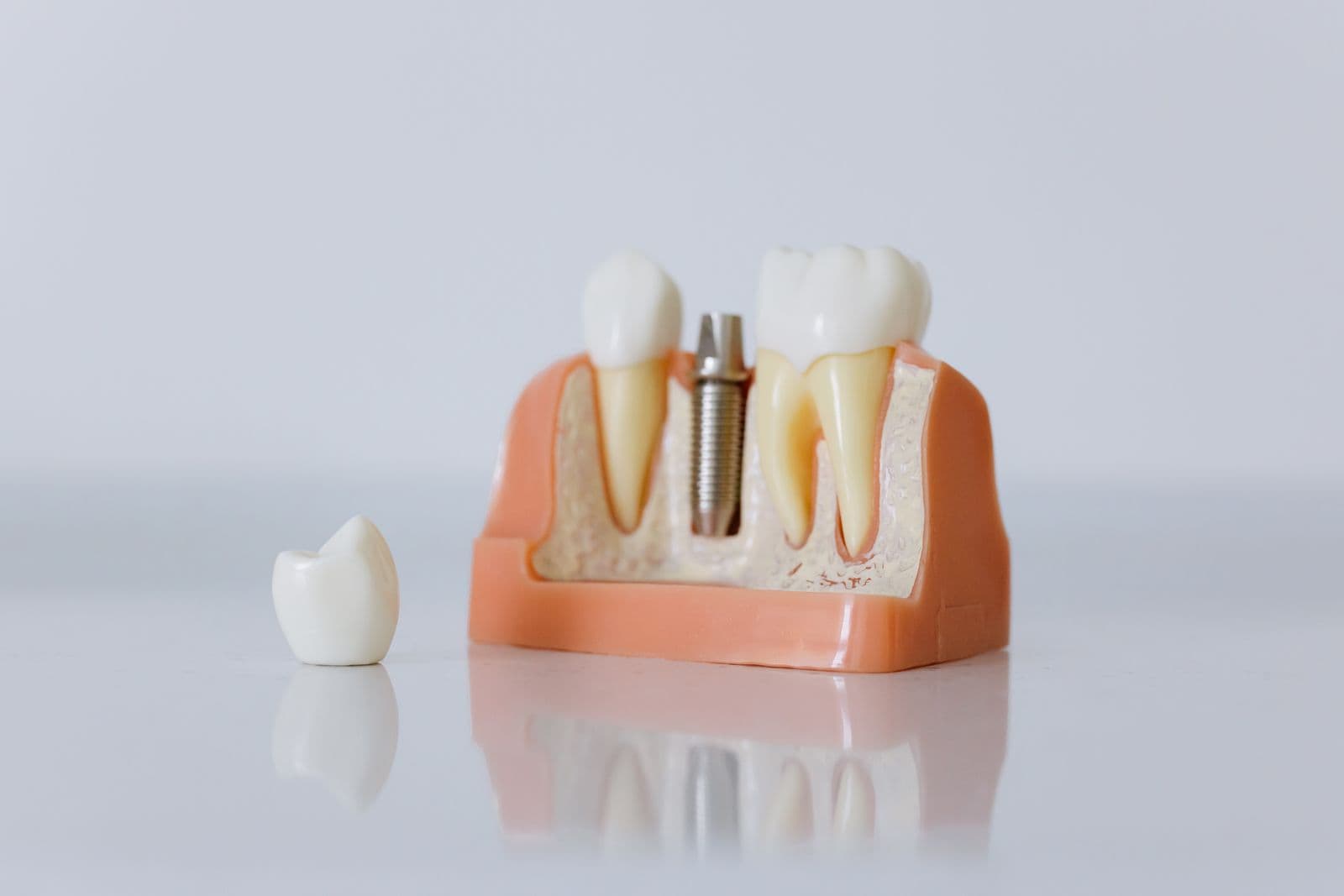
- Implant-supported bridge: Support is taken not from natural teeth but from implants placed in the jawbone. In cases of several consecutive missing teeth, it offers a fixed solution without touching the natural teeth at all.
How Is a Dental Bridge Made? Step-by-Step Process
Bridge treatment is completed within two or three appointments in most cases. With implant-supported bridges the process proceeds a little differently: first, the implants are expected to fuse with the jawbone, and then the bridge is fixed onto these implants. Thanks to digital impression and design technologies, the fit of bridges can now be planned with high precision, and natural-looking results can be achieved with small corrections made at the try-in stage.
A classic, tooth-supported bridge typically follows these stages:
- Examination and planning: The root structure and bone support of the abutment teeth are evaluated with X-rays; if necessary, decay and gum treatments are completed first.
- Preparation of the teeth: Under local anaesthesia, the supporting teeth are shaped so that the crowns can be seated.
- Taking impressions: A classic impression or a digital impression with an intraoral scanner is taken and sent to the laboratory.
- Temporary bridge: Until the permanent bridge is ready, a temporary restoration is bonded to protect the teeth from hot and cold stimuli.
- Try-in and cementation: The fit, bite and colour of the permanent bridge are checked; if everything is appropriate, the bridge is fixed with permanent cement.
Which Materials Are Used in a Bridge?
The material from which the bridge is made is as decisive as its design in terms of longevity and aesthetics. While metal-supported porcelain bridges have been used for many years thanks to their durability, metal-free options are increasingly coming to the fore today. Bridges with a zirconia crown framework, which approach the appearance of a natural tooth thanks to their light transmission and do not create a grey reflection at the gum line, are among the frequently preferred solutions in both the front and back regions.
In material selection, chewing force, teeth-grinding habits, the length of the gap and aesthetic expectations are evaluated together. For example, durability is prioritised in long-span posterior bridges, while colour and light transmission may take priority in bridges visible in the smile line. Mild sensitivity may be seen in the first days after cementation; this is usually temporary. If there is a feeling of premature contact in the bite or prolonged sensitivity, consulting your dentist allows the problem to be resolved with a short adjustment.
Implant or Bridge? Which Option Stands Out in Which Situation?
This is the most frequently asked question in missing tooth treatment, and there is no single correct answer; the situations in which each method stands out are different. Implant treatment involves placing a titanium screw that imitates the root of the missing tooth into the jawbone and making a crown on top of it; its most important advantage is that the neighbouring teeth are not touched at all. The bridge, on the other hand, offers a fixed result in a relatively short time without requiring surgery. The following points are evaluated when deciding:
- If the neighbouring teeth are healthy and free of fillings, the implant option is usually considered first in order not to grind them down.
- If the teeth on both sides of the gap already have large fillings or need crowns, a bridge can also restore these teeth and provide a solution with a single plan.
- In health conditions where surgery is not considered appropriate, or in cases where bone volume is insufficient and advanced surgery is not desired, the bridge may come to the fore.
- Since the implant stimulates the jawbone like a natural tooth root, it can contribute to preserving the bone volume in the area; under the body of a bridge, however, volume loss may be seen in the bone over time.
- In terms of treatment time, a bridge is completed within a few weeks in most cases, while the process of waiting for the implant to fuse with the bone can take several months.
Advantages and Disadvantages of Dental Bridges
The main advantages of the bridge can be summarised as follows: It is fixed, does not require insertion and removal, and gives a more natural feeling of use than removable dentures. The treatment time is relatively short; in most cases it is completed in a few appointments. Since it does not require surgery, it is a fixed alternative for patients who avoid surgery or for whom surgery is not suitable. It can largely restore chewing and speech function.
Its disadvantages should not be ignored either: During the shaping of the abutment teeth, healthy tooth structure is irreversibly removed. The area under the bridge body can become risky for decay and gum inflammation if daily cleaning is neglected. The bone in the area of the missing tooth may lose volume over time because it is deprived of natural stimulation. In addition, if a problem occurs in one of the supporting teeth in the future, the entire bridge may need to be renewed.
These pros and cons carry different weight for each mouth. When the examination, X-ray findings and your expectations are evaluated together, it becomes clear which option is balanced for you; the healthiest way is to make this evaluation together with your dentist. For details of the implant option, you can take a look at our dental implant guide.
Dental Bridge Care: How to Clean Under the Bridge?
One of the most important factors determining the life of the bridge is the cleanliness of the area under the body. Since the bridge is one piece, dental floss cannot be passed between the teeth in the usual way; therefore, cleaning tools specific to the bridge are needed. If you notice bleeding, redness or odour around the supporting teeth, or a feeling of food catching at the edge of the bridge, it is recommended that you consult your dentist without waiting for your check-up appointment; gum problems resolved at an early stage both increase your comfort and can extend the life of your bridge.
The tools recommended to be added to the daily routine for cleaning under the bridge are as follows:
- Super floss (bridge floss): Special dental floss with a stiff guiding end should be passed under the bridge body and the surface under the bridge should be cleaned every day.
- Interdental brushes: An interdental brush suitable for the size of the space between the bridge body and the gum should be added to daily use.
- Oral irrigator: Devices that spray pressurised water can support mechanical cleaning in removing food residues under the bridge.
- Brushing twice a day with fluoride toothpaste: Particular attention should be paid to the gum line of the supporting teeth.
- Regular check-ups: A dental check-up every six months and professional dental cleaning when deemed necessary can extend the life of the bridge.
Frequently Asked Questions About Dental Bridges
How many years does a dental bridge last? Depending on the quality of care and the health of the supporting teeth, bridges can generally function between 5 and 15 years; this period can be extended with regular cleaning and check-ups. The main factor determining the life of the bridge is that the supporting teeth and the surrounding gum remain healthy.
Is getting a bridge painful? Since the shaping of the teeth is done under local anaesthesia, no pain is expected during the procedure. Mild sensitivity that can last a few days may be seen afterwards; if there is prolonged pain or a feeling of premature contact in the bite, an adjustment should be made under the supervision of a dentist.
How is a dental bridge cleaned? In addition to brushing twice a day, the area under the bridge body should be cleaned every day with super floss and an interdental brush. An oral irrigator can support this cleaning; at six-monthly check-ups your dentist can review your cleaning technique.
Is a bridge or an implant better? The situations in which each method stands out are different; the condition of the neighbouring teeth, bone volume, general health and expectations are decisive. The appropriate option for you is clarified through a dental examination and X-ray evaluation.
What should I do if my dental bridge falls off? Keep the bridge and do not try to glue it back yourself; adhesives on the market can damage the tissues and impair the fit of the bridge. Since the risk of sensitivity and decay increases when the supporting teeth are exposed, it is recommended that you consult your dentist as soon as possible.
Do teeth under a bridge decay? The tooth structure under the crown can decay if there is micro-leakage from the crown margin; therefore, marginal fit and daily cleaning are of great importance. At regular check-ups, the crown margins are monitored and possible problems can be caught at an early stage.

This content was prepared by the dental team of our clinic in Cukurambar, Ankara. Feel free to contact us with any questions about your oral and dental health.
This content is for informational purposes only; a dental examination is required for diagnosis and treatment.
Have questions? We are happy to help.
Related Articles

Are Dental X-Rays Harmful? A Guide to Radiation Doses and Safety
Worried about getting a dental X-ray? This guide covers the actual radiation doses of panoramic X-rays and CBCT scans, safety principles during pregnancy and childhood, and the protective measures taken in modern clinics.

Why Do Teeth Turn Yellow? Causes of Tooth Discoloration and Solutions
Is it tea, coffee and smoking, or age, medication and enamel structure? The extrinsic and intrinsic causes of yellow teeth, the limits of home remedies, professional solutions and the habits that slow discoloration, all in this guide.
Gum Inflammation (Gingivitis): Symptoms, Causes and Treatment
Gums that bleed while brushing and look red and swollen are often the first sign of gingivitis. What causes gum inflammation, how does it differ from periodontitis, and how is it treated? Symptoms, treatment and home care in this guide.