
Table of Contents
- How Does Smoking Affect Oral and Dental Health?
- Why Is Smoking So Harmful to the Gums?
- What Visible Changes Does Smoking Cause in the Mouth?
- How Does Smoking Affect the Success of Dental Treatments?
- Are E-Cigarettes and Waterpipes Really Less Harmful?
- What Can Smokers Do to Protect Their Oral Health?
- What Changes in Your Oral Health When You Quit Smoking?
- Frequently Asked Questions About Smoking and Dental Health
How Does Smoking Affect Oral and Dental Health?
The mouth is the first part of the body that cigarette smoke comes into contact with. With every puff, nicotine, tar and thousands of different chemicals meet the teeth, the gums, the tongue and the delicate mucosa lining the mouth directly. For this reason, the effects of smoking on oral health can appear earlier and more visibly than in many other parts of the body.
At the centre of this effect lies the vasoconstrictive property of nicotine. When blood flow to the gums decreases, the amount of oxygen and nutrients delivered to the tissues drops, and the immune cells that fight inflammation cannot reach the area in sufficient numbers. In addition, smoking can negatively affect both the quantity and the composition of saliva. Saliva is a natural defence system that protects the teeth against acids, washes away bacteria and keeps the mouth moist. When this system is weakened, favourable conditions arise for tooth decay, gum disease and bad breath.
The combination of these mechanisms creates a wide-ranging picture: from gum disease to tooth loss, from permanent discolouration to a reduced sense of taste, from healing problems after surgical procedures to an increased risk of oral cancer. In the rest of this article we examine these effects one by one, explain what smokers can do to protect their oral health, and describe what may change once smoking is stopped.
Why Is Smoking So Harmful to the Gums?
Research shows that gum disease is significantly more common in smokers than in non-smokers and can follow a more severe course. Smoking changes the structure of the bacterial plaque that accumulates on the tooth surface, creates a favourable environment for harmful microorganisms to multiply, and at the same time suppresses the defensive response of the tissues against these bacteria.
The most insidious effect of smoking on the gums is that it masks bleeding. Bleeding gums are the most important early warning sign of gum inflammation; however, because nicotine constricts the blood vessels, even a diseased gum may not bleed in a smoker. This creates the illusion that the gums are healthy, and the disease progresses silently without being noticed. In smokers, gum disease is often recognised only at an advanced stage, through symptoms such as loose teeth or receding gums.
As the disease progresses, the bone supporting the teeth may begin to break down, and the gums may pull away from the teeth, forming deep pockets. One of the visible consequences of this process is gum recession, which we covered in detail, together with its causes and treatment approaches, in our guide to gum recession. Recession is not merely an aesthetic problem; exposed root surfaces can lead to sensitivity and create conditions for root decay.
With professional gum treatments, the progression of the disease can in most cases be slowed or halted; however, scientific data show that as long as smoking continues, the response to treatment may remain more limited. For this reason, reducing or quitting smoking is considered one of the most important steps supporting treatment success in people undergoing gum therapy.
What Visible Changes Does Smoking Cause in the Mouth?
While some of the effects of smoking progress silently over the years, others can be noticed directly in the mirror or in daily life. The changes frequently seen in smokers include the following:
- Yellow-brown discolouration of the tooth surface: Tar and nicotine first adhere to the tooth surface; over time they penetrate the porous structure of the enamel and can turn into permanent stains that brushing cannot remove.
- Persistent bad breath: The combination of smoke residues, dry mouth and gum inflammation creates a typical smoker's breath that mouthwash alone cannot eliminate.
- Reduced sense of taste and smell: Smoking can affect the taste buds and olfactory receptors, diminishing the pleasure taken in food.
- Accelerated tartar build-up: In smokers, plaque tends to harden into tartar more quickly, which in turn feeds gum inflammation.
- Changes on the palate and tongue: With long-term use, a whitish appearance on the palate, a coated tongue and a feeling of dry mouth may develop.
- Non-healing sores and lesions: Any sore or white or red patch in the mouth that lasts longer than two weeks must be evaluated by a dentist; smoking is one of the most important risk factors for oral cancer.
How Does Smoking Affect the Success of Dental Treatments?
The impact of smoking is not limited to existing tissues; it can also directly affect the success of the treatments performed. The best-known example is implants. The fusion of an implant with the jawbone (osseointegration) requires well-perfused, healthy bone tissue. Scientific studies report that this integration process can be disrupted in smokers, and that bone loss and inflammatory problems around the implant may occur more frequently. For this reason, it is important that people considering implant treatment openly discuss their smoking habits with their dentist; clinicians generally recommend a smoke-free period of a certain length before and after surgery.
After a tooth extraction, smoking increases the risk of a painful condition called alveolar osteitis (dry socket). The blood clot that forms in the extraction site is the foundation of healing; the suction created while smoking and the chemicals in the smoke can cause this clot to break down. You can find detailed advice in our article on aftercare following tooth extraction.
A similar picture applies to gum treatments and oral surgical procedures: because of reduced blood flow and a suppressed immune response, healing may be slower and the results less predictable. Dentists regard smoking as a significant risk factor when planning treatment.
In aesthetic treatments, the issue is durability. The result achieved after professional teeth whitening can fade faster than expected if smoking continues; new staining begins again within a short time. Similarly, discolouration may appear over time along the margins of crowns and fillings.
Are E-Cigarettes and Waterpipes Really Less Harmful?
Electronic cigarettes are often marketed as a harmless alternative; from the point of view of oral health, however, the picture is not that optimistic. Most e-cigarettes contain nicotine, and nicotine impairs the nutrition of the gum tissue by constricting blood vessels, regardless of how it is taken. The heated aerosol can cause dry mouth, and the sweeteners and sticky ingredients in some liquids can adhere to the tooth surface and increase the risk of decay. There are also studies indicating that gum pockets can deepen in e-cigarette users.
There is as yet no strong, long-term scientific evidence demonstrating that e-cigarettes are clearly safer than conventional cigarettes. Because these products are relatively new, knowledge about their long-term effects is limited, and previously unknown risks are expected to become clearer over time.
The waterpipe is not innocent either: a single waterpipe session means intense smoke exposure over a long period, and the tobacco is still burned. Shared mouthpieces can additionally provide a route for microorganisms to pass from person to person. It is fair to say that all tobacco and nicotine products, including heated tobacco products, have an effect on the oral tissues.
What Can Smokers Do to Protect Their Oral Health?
Quitting smoking is of course the most effective step; however, people who have not yet been able to quit, or who are in the process of quitting, can still do a great deal to protect their oral health:
- Brush your teeth at least twice a day with fluoride toothpaste and proper technique; add dental floss or interdental brushes to your daily routine.
- Do not skip dental check-ups: for smokers, regular examinations that include gum measurements and an inspection of the oral mucosa are particularly important for catching problems early.
- Have professional tartar cleaning performed at the intervals your dentist recommends; because tartar builds up faster in smokers, this interval may be set more frequently on an individual basis.
- Drink plenty of water throughout the day to counteract dry mouth; sugar-free chewing gum can help stimulate saliva flow.
- Do not neglect brushing the surface of your tongue or using a tongue scraper; a large proportion of odour-causing bacteria live on the back of the tongue.
- Report any changes such as a sore lasting longer than two weeks, white or red patches, unexplained bleeding or difficulty swallowing to your dentist without delay.
What Changes in Your Oral Health When You Quit Smoking?
When smoking is stopped, the oral tissues enter a recovery process. As the constriction of the blood vessels resolves, blood flow to the gums begins to return to normal and the defensive capacity of the tissues strengthens. An interesting detail: in the weeks following quitting, a temporary increase in gum bleeding may be noticed. In most cases this is not a deterioration but the existing inflammation, previously masked by nicotine, becoming visible; even so, a dental examination during this period is useful for understanding the true condition of the gums.
The change in the teeth also reveals itself over time: new stain formation stops, bad breath diminishes, and the senses of taste and smell can recover noticeably within weeks. Existing stains do not disappear on their own; professional cleaning and, where considered appropriate, whitening procedures can be planned with your dentist.
In the long term, the gains grow even larger: the progression of gum disease slows, the risk of tooth loss decreases, and the chances of success in surgical procedures and implant treatments approach those of non-smokers. Research shows that the risk of oral cancer also declines gradually over the years as the time since quitting increases.
Remember that you are not alone in the quitting process: your dentist can monitor the changes in your mouth together with you, and professional support is available from resources such as national quitline services.
Frequently Asked Questions About Smoking and Dental Health
I smoke but my gums do not bleed; does this mean my gums are healthy? No, not necessarily. Because nicotine constricts the blood vessels, even an inflamed gum may not bleed in a smoker; the absence of bleeding does not prove the absence of disease. The true condition of your gums can only be determined through a dental examination and gum measurements.
Will my teeth whiten by themselves after I quit smoking? With quitting, new stain formation stops, but existing discolouration that has penetrated the enamel does not disappear on its own. Professional dental cleaning can remove superficial stains to a large extent; for deeper discolouration, whitening options are assessed through a dental examination.
Can smokers have dental implants? Smoking is not an absolute barrier to implant treatment; however, it is known to increase the risk of failure and of inflammation around the implant. Suitability is assessed through a dental examination, together with bone structure, gum health and general health. Clinicians generally recommend stopping or minimising smoking around the time of surgery.
How soon after a tooth extraction can I smoke? The first 24 to 72 hours after an extraction are the most critical period for protecting the blood clot, and complete abstinence from smoking is recommended during this time. The longer you go without smoking, the lower the risk of dry socket; the specific period for you is determined by your dentist according to the extent of the procedure.
Are e-cigarettes safe for the teeth? They are not considered safe. Nicotine-containing e-cigarettes affect gum circulation in a way similar to conventional cigarettes; the aerosol can contribute to dry mouth, and some liquids may contribute to an increased risk of decay. Scientific data on long-term effects are still limited.
Can smoking stains be removed by professional scaling? Most superficial stains on the tooth surface and discoloured tartar can be removed with professional cleaning and polishing. For discolouration that has penetrated deep into the enamel, additional procedures such as whitening may be required; the approach suitable for you is determined through a dental examination.

This content was prepared by the dental team of our clinic in Cukurambar, Ankara. Feel free to contact us with any questions about your oral and dental health.
This content is for informational purposes only; a dental examination is required for diagnosis and treatment.
Have questions? We are happy to help.
Related Articles

Tooth Enamel Erosion: Causes, Symptoms and Treatment Options
Tooth enamel is the hardest tissue in the human body, yet once it wears away it cannot regenerate. In this guide you will find the causes of enamel erosion, its early warning signs, treatment options and the everyday habits that help protect your enamel.
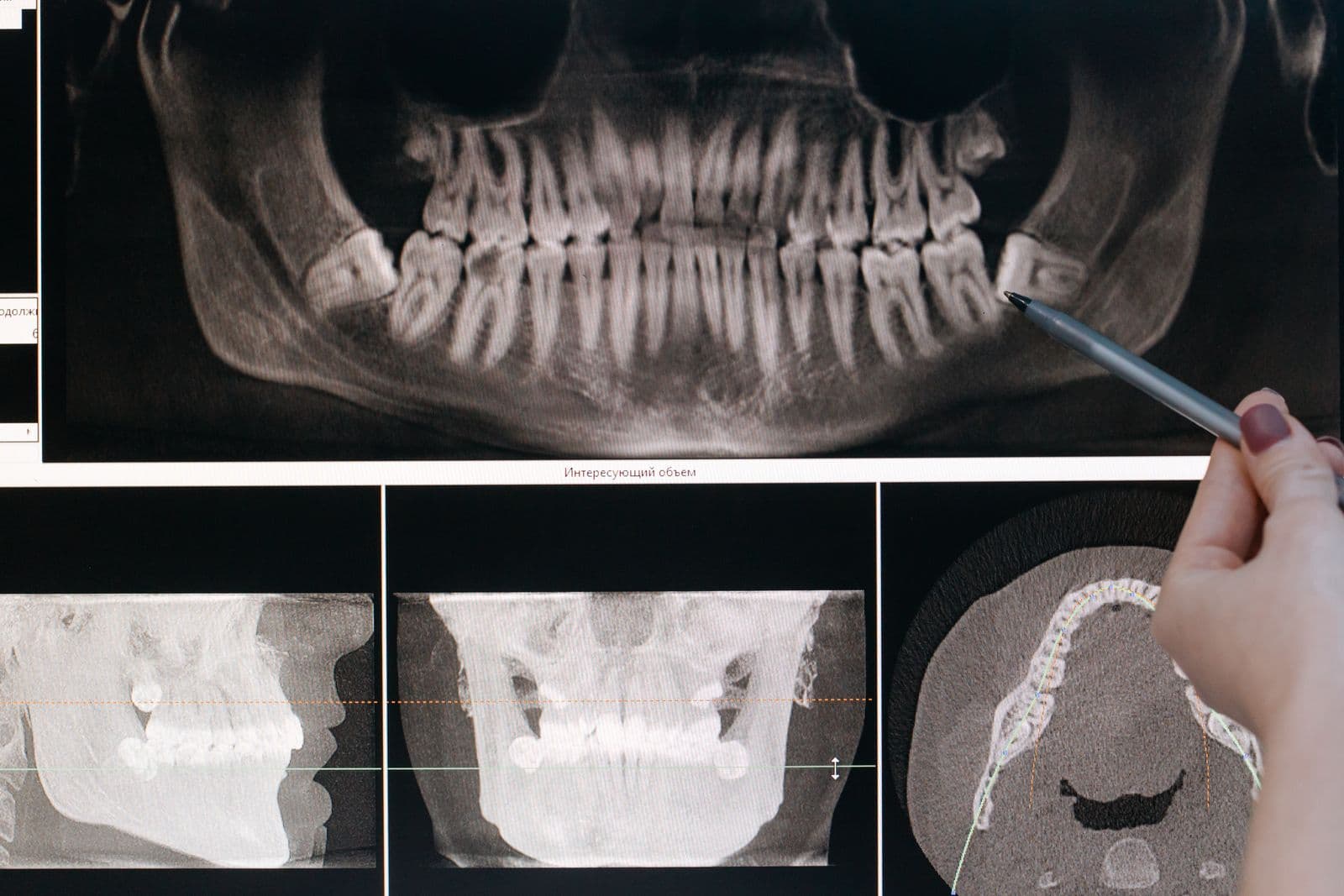
Dental Cysts: Symptoms, Causes and Treatment Options
A dental cyst can grow silently for years and is often discovered by chance on a routine X-ray. This guide covers the causes and types of cysts, how they differ from abscesses, the surgical process and the recovery period.
Dentures (Removable Prosthesis) Guide: Types, Adjustment Period and Care
Who are dentures suitable for, how are they made, and what does the adjustment period look like? The difference between complete and partial dentures, relining a loose denture, daily care rules and implant-supported options in this comprehensive guide.