
Table of Contents
- What Is a Dental Filling and When Is It Needed?
- What Are the Types of Dental Fillings?
- How Is a Dental Filling Placed? The Procedure Step by Step
- How Do Inlay and Onlay Fillings Differ From Conventional Fillings?
- Filling or Root Canal? How Is the Decision Made in Deep Decay?
- Is Pain and Sensitivity After a Filling Normal?
- How Long Does a Dental Filling Last and How Can Its Life Be Extended?
- Composite Fillings on Front Teeth: Can They Be Used for Aesthetic Purposes?
- Frequently Asked Questions About Dental Fillings
What Is a Dental Filling and When Is It Needed?
A dental filling is a procedure in which tooth tissue damaged by decay, fracture or wear is cleaned, and the resulting cavity is filled with a tissue-compatible material to restore the tooth's shape and function. It is one of the most frequently performed restorative treatments in dentistry, and when properly planned it can help the tooth remain healthy in the mouth for many years.
When people hear the word filling, they usually think of cavity treatment; however, its range of use is broader than that. Once you understand how tooth decay forms and which stages it goes through, it becomes clearer why decay that passes beyond the enamel and reaches the dentin requires restoration. In addition, repairing broken or cracked teeth, reshaping worn tooth surfaces, replacing ageing fillings and correcting minor shape irregularities are also situations that can be resolved with a filling.
Early diagnosis is the greatest advantage of this treatment: a small cavity can usually be treated with a small filling completed in a single visit, whereas neglected decay can deepen, approach the nerve and make more extensive procedures necessary. For this reason, regular dental check-ups play an important role in identifying the need for filling treatment at the right time. Check-ups carried out before pain begins usually mean shorter and more comfortable treatment.
What Are the Types of Dental Fillings?
Today there is more than one filling material available to meet different needs. Which material is used depends on the size of the cavity, the position of the tooth in the mouth, the chewing forces involved and the aesthetic expectations. The most commonly used options are: Contrary to common belief, there is no single filling material that is ideal for every situation.
The choice of material is not a matter left to the patient's preference alone; each material has situations in which it is advantageous. The healthiest approach is to decide on the most suitable option for your tooth together with your dentist, based on an intraoral examination and, where necessary, radiographic evaluation.
- Composite filling: This tooth-coloured material is the most widely preferred option in modern clinics. Because it bonds chemically to the tooth, only a minimal amount of healthy tissue needs to be removed; it is applied in a single visit and hardened instantly with a special curing light.
- Porcelain (ceramic) fillings: Used in inlay and onlay restorations prepared in a laboratory. Their resistance to discolouration and high durability make them stand out, especially in cases of extensive tissue loss.
- Glass ionomer filling: This fluoride-releasing material can be preferred particularly for primary teeth and lesions in the neck area of the tooth; however, its resistance to chewing pressure is more limited than that of composite.
- Amalgam filling: This grey-coloured metal alloy was widely used for many years; although durable, it has largely given way to composite in current practice because it is not aesthetic and does not bond chemically to tooth tissue.
- Temporary filling: A short-term solution applied to protect the tooth between appointments in procedures that require more than one visit, such as root canal treatment.
How Is a Dental Filling Placed? The Procedure Step by Step
In most cases a filling is completed in a single visit and, thanks to local anaesthesia, the procedure is generally painless. The process broadly consists of the following steps:
Although the duration of the procedure varies according to the size and location of the decay, an appointment of around half an hour is usually sufficient for a single tooth. Once the effect of the anaesthesia wears off, you can carry on with your daily life where you left off; in the first hours it is enough simply to avoid very hot foods.
- Examination and imaging: The depth of the decay and its proximity to the nerve are assessed through a clinical examination, supported by radiographs where necessary.
- Local anaesthesia: The area to be treated is numbed; for very superficial cavities, anaesthesia may not even be required.
- Removal of the decay: The damaged tissue is removed with special instruments and the cavity is prepared in a way that preserves healthy tooth structure.
- Isolation: For the filling to bond properly to the tooth, the area must be isolated from saliva; a protective sheet called a rubber dam or cotton rolls are used for this purpose.
- Placing the filling: After a bonding agent is applied, the composite material is placed in layers and each layer is hardened with a special curing light.
- Bite check and polishing: The height of the filling is adjusted according to the chewing contact, and the surface is smoothed to give the tooth its natural form.
How Do Inlay and Onlay Fillings Differ From Conventional Fillings?
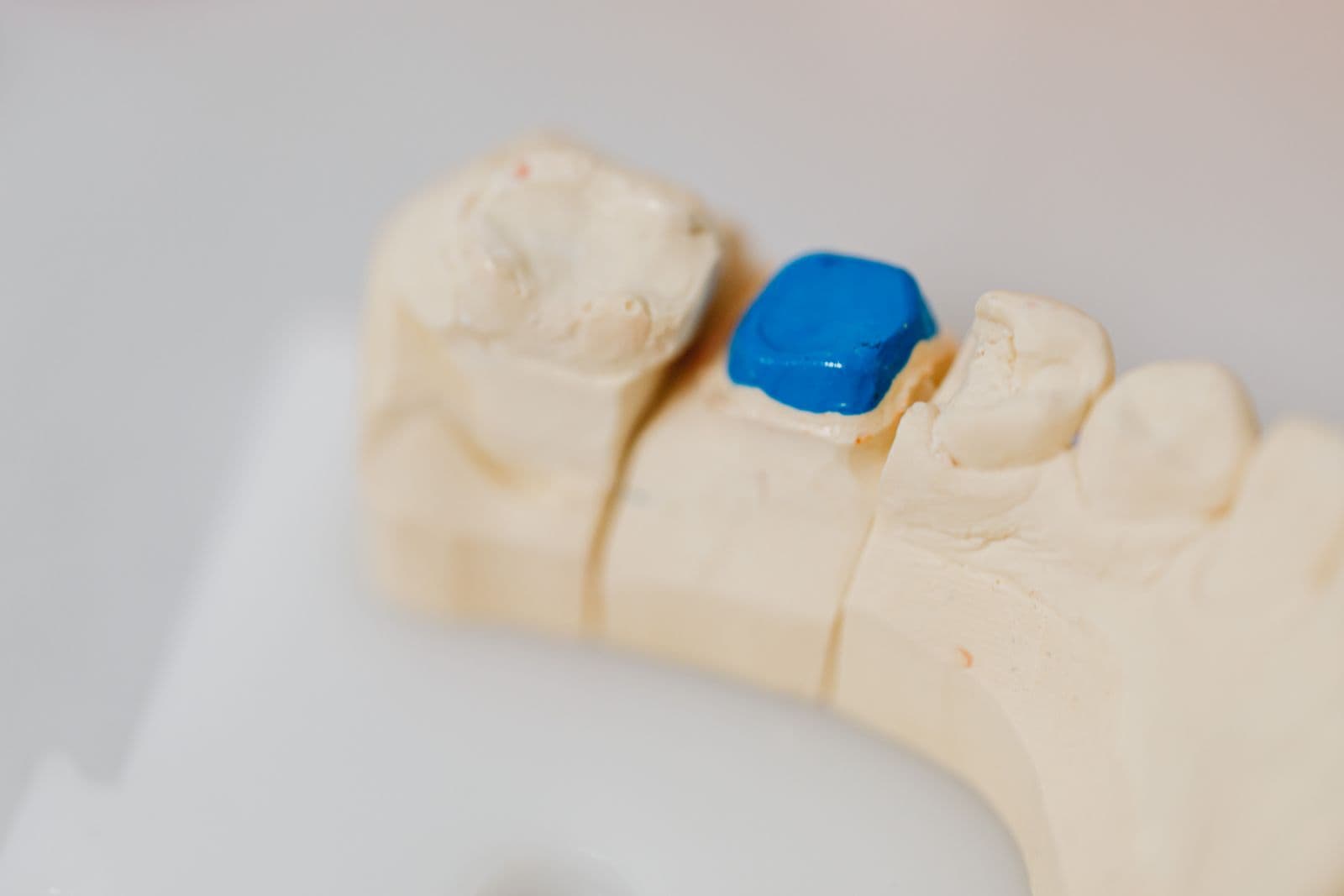
In teeth with extensive tissue loss, a conventional composite filling shaped by hand inside the mouth may not always provide sufficient strength. In these situations, partial restorations called inlays and onlays, made in a laboratory from porcelain or reinforced composite, come into play.
An inlay is applied to internal cavities that do not involve the raised points of the tooth known as cusps, while an onlay covers wider areas including one or more cusps. Thanks to digital impression technologies, these restorations are fitted to the tooth with high precision and are usually completed in two visits.
Because this approach can eliminate the need to cover the tooth entirely with a crown, it is a valuable intermediate solution for preserving healthy tissue. Which tooth should be restored with a conventional filling, an inlay-onlay or a crown is clarified through a dental examination. The daily care of inlay and onlay restorations is no different from that of natural teeth; regular brushing and flossing are sufficient in most cases.
Filling or Root Canal? How Is the Decision Made in Deep Decay?
The key criterion in this distinction is whether the decay has reached the pulp, the bundle of nerves and vessels inside the tooth. If the decay has remained within the dentin and the pulp is healthy, a filling is sufficient in most cases; however, if bacteria have reached the pulp and irreversible inflammation has developed, a filling alone will not solve the problem. For this reason, in deep decay the treatment plan only becomes clear after the condition of the tooth's inner tissue has been assessed.
Pain that starts spontaneously and can wake you from sleep at night, throbbing that continues long after hot or cold stimuli, and pronounced sensitivity when biting are among the findings that may indicate the pulp is affected. In such cases, evaluation of the tooth with vitality tests and radiographs may reveal the need for root canal treatment.
In deep cavities that are very close to the pulp but have not yet reached it, the dentist may choose to place a filling over special protective lining materials and monitor the tooth. The decision is made individually for each tooth by evaluating the nature of the complaint, the examination findings and the imaging together.
Is Pain and Sensitivity After a Filling Normal?
Mild sensitivity, especially to cold stimuli, is common for a few days after a filling and subsides on its own in most cases. In deep fillings this period may last somewhat longer, which can also be considered normal, because the pulp may need time to adapt to the new situation. Staying away from very hot and cold foods for a while during this period helps you get through this adaptation phase without straining the tooth.
If you feel a distinct pain at a single point when biting, the filling may simply need a small height adjustment; this can easily be corrected in a short follow-up appointment. Knowing the causes of tooth sensitivity and the measures you can take helps you distinguish the usual course from symptoms that need attention.
If the sensitivity increases over the weeks instead of decreasing, if spontaneous pain develops or if you notice swelling in the gum, it is advisable to see your dentist without delay; these findings may indicate that the tooth needs to be re-evaluated.
How Long Does a Dental Filling Last and How Can Its Life Be Extended?
The lifespan of a filling varies according to the material used, the size of the filling, the position of the tooth and the person's oral care habits. It would therefore not be accurate to give a single figure valid for every patient; there are fillings that last for many years without problems thanks to regular care, while fillings exposed to heavy chewing forces may need to be replaced earlier. Large fillings in the back molars naturally carry more load than small fillings in the front teeth.
Extending the life of a filling largely depends on daily habits: brushing twice a day with fluoride toothpaste, cleaning between the teeth with dental floss, avoiding habits such as biting pens or cracking nuts with your teeth, and consulting your dentist if you grind or clench your teeth all protect your fillings. Professional dental scaling performed during regular check-ups also helps reduce the risk of new decay forming at the edges of the filling.
Fillings that show discolouration at the edges, develop a rough surface or start to trap food may signal the need for replacement. Routine check-ups every six months ensure that these changes are noticed before they turn into bigger problems. It should not be forgotten that no filling material can fully replace natural tooth tissue; the real goal is to protect the remaining healthy tissue for life.
Composite Fillings on Front Teeth: Can They Be Used for Aesthetic Purposes?
Composite material is frequently used not only for treating decay but also for aesthetics in the front region. Completing chipped edges, closing small gaps between teeth and correcting shape irregularities can often be achieved with composite applications, also known as bonding, in a single visit and with almost no removal of tooth structure. The aim in such applications is to restore the natural appearance of the tooth with minimal intervention.
Shade selection requires particular care in front tooth fillings: composites are applied by combining layers of different shades and translucencies to imitate natural tooth tissue. Since heavy consumption of staining agents such as coffee, tea and cigarettes can cause discolouration on the filling surface over time, regular check-ups and polishing help preserve the aesthetic appearance.
For more comprehensive aesthetic expectations, the limits of composite should be evaluated together with your dentist; in some cases, laboratory-made alternatives such as porcelain laminate veneers may offer a more predictable result. Which method is suitable is clarified through an examination that considers the current condition of the teeth and your expectations together.
Frequently Asked Questions About Dental Fillings
Does getting a dental filling hurt? Thanks to the local anaesthesia applied before the procedure, pain is not expected during the filling; most patients describe only slight vibration and pressure. For very superficial cavities, anaesthesia may not even be necessary.
Is pain after a filling normal, and how long does it last? Mild sensitivity to cold is common in the first days and usually subsides on its own. In deep fillings this period may last somewhat longer; however, if the pain gradually increases or starts spontaneously, the tooth should be re-evaluated with a dental examination.
When can I eat after a filling? Light-cured composite fillings reach their hardness as soon as the procedure is finished; what really needs to be waited out is the effect of the anaesthesia. While the numbness continues, the cheek and tongue can be bitten unnoticed, so it is advisable to avoid foods that require chewing for a few hours.
How long does a dental filling last? Durability varies from person to person depending on the type of material, the size of the filling and oral care. Regular brushing, flossing and routine check-ups can significantly extend the life of a filling.
My filling fell out — what should I do? A tooth that has lost its filling may become sensitive to hot and cold, and the exposed cavity creates a suitable environment for decay to develop. Avoiding chewing on that side and seeing your dentist as soon as possible can prevent the tooth from losing more structure.
Should old amalgam fillings be removed? Removing an intact, functioning amalgam filling solely because it is not aesthetic is not a routine recommendation. Replacement becomes an option for fillings with deteriorated margins, decay underneath or fractures; the decision is made tooth by tooth through a dental examination.

This content was prepared by the dental team of our clinic in Cukurambar, Ankara. Feel free to contact us with any questions about your oral and dental health.
This content is for informational purposes only; a dental examination is required for diagnosis and treatment.
Have questions? We are happy to help.
Related Articles
Dentures (Removable Prosthesis) Guide: Types, Adjustment Period and Care
Who are dentures suitable for, how are they made, and what does the adjustment period look like? The difference between complete and partial dentures, relining a loose denture, daily care rules and implant-supported options in this comprehensive guide.
Orthodontic Treatment in Children: At What Age Are Braces Fitted?
Have you noticed crowding in your child's teeth? The right time for the first orthodontic check-up, the causes of crowding, the benefits of early treatment, appliance types and braces care — all in this comprehensive family guide.
What Is a Dental Bridge? Types, Procedure Steps and Comparison with Implants
Considering a bridge or an implant for your missing teeth? In this comprehensive guide you will find the types of dental bridges, the step-by-step procedure, the finer points of cleaning under a bridge and a comparison with implants.