
Table of Contents
- What Is Bruxism? Sleep vs. Awake Types
- Stress and the Screen Age: Why Bruxism Is on the Rise
- The Warning Signs: What Is Your Body Telling You?
- What Can Happen Over Time? From Enamel Loss to TMJ Problems
- How Does a Night Guard Work?
- Stress Management and Sleep Hygiene: Everyday Steps That May Help
- Myth or Fact? Common Misconceptions About Bruxism
- When Should You See a Dentist?
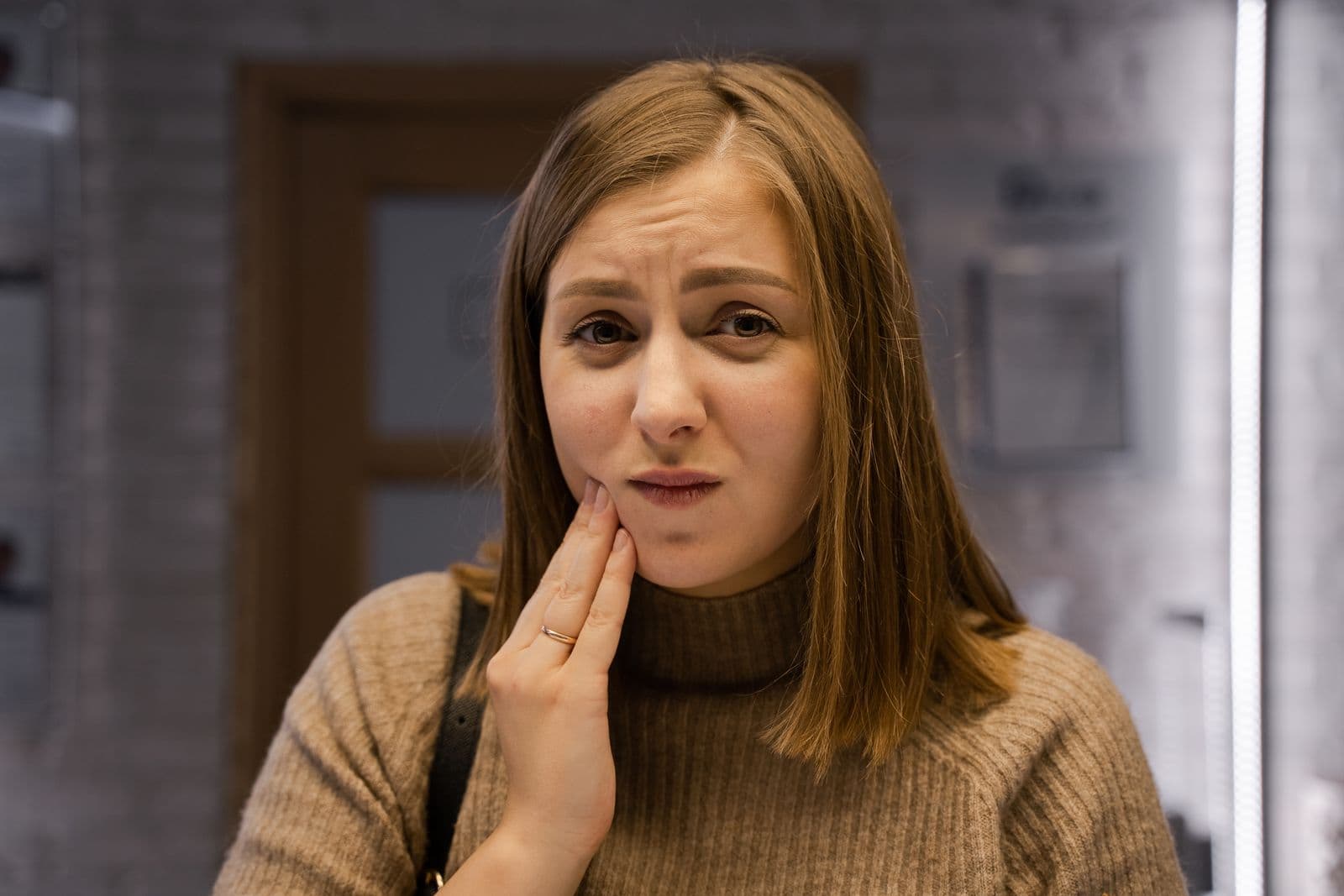
If you wake up with a tired jaw, tight temples and a dull morning headache, the cause may be something you never see happening: grinding or clenching your teeth during the night. This condition, known as bruxism, can go unnoticed for years — precisely because it is most active while you are asleep.
Studies suggest that a significant proportion of adults grind or clench their teeth at some point in their lives. With demanding work schedules, long hours in front of screens and rising stress levels, it is hardly surprising that bruxism is increasingly described as a silent epidemic of modern life.
In this article we look at what bruxism is, the difference between its sleep and awake forms, the warning signs, the possible long-term effects on teeth and the jaw joint, how a night guard works, and when it makes sense to see a dentist.
What Is Bruxism? Sleep vs. Awake Types
Bruxism is the medical term for the involuntary clenching, pressing or grinding of the teeth. Unlike chewing or speaking, these movements serve no functional purpose: the jaw muscles contract on their own, and the forces transferred to the teeth can far exceed those of normal chewing.
Sleep bruxism occurs during sleep and is classified as a sleep-related movement disorder. Most people are completely unaware of it; the first clue is often a partner who hears the grinding sound at night, or the jaw fatigue felt on waking.
Awake bruxism, by contrast, shows up during the day — typically as silent clenching in moments of concentration or tension. If you notice your jaw locking while working at a computer, sitting in traffic or navigating a difficult conversation, you may be experiencing the daytime form. The two types can also occur together in the same person.
Stress and the Screen Age: Why Bruxism Is on the Rise
Bruxism rarely has a single cause. Genetic predisposition, sleep disorders, certain medications and lifestyle factors may all play a role. The factor most consistently highlighted in current research, however, is psychological stress and anxiety: tension accumulated during the day can be discharged at night through the jaw muscles.
Digital lifestyles add to the picture. Long screen sessions with a forward head posture can create chronic tension in the neck and jaw muscles, while late-night phone use erodes sleep quality — and poorer sleep has been linked to more frequent episodes of sleep bruxism.
Caffeine and tobacco use, stimulating drinks in the evening and irregular sleep schedules are also associated with bruxism in the literature. For this reason, bruxism is best understood not as an isolated dental problem but as a condition connected to your lifestyle as a whole.
The Warning Signs: What Is Your Body Telling You?
The most deceptive aspect of bruxism is that its symptoms often masquerade as something else entirely. Many people who wake up with headaches never suspect that the source could be their jaw muscles. If several of the signs below sound familiar, it is worth discussing them with a dentist.
The severity varies widely from person to person. Some experience nothing more than mild jaw fatigue, while others develop visible tooth wear and persistent pain.
- Pain or tiredness in the jaw, face or temples on waking
- Tension-type headaches, especially in the morning
- Teeth that look shorter, flatter or worn at the edges
- Increased sensitivity to hot and cold
- Clicking or catching in the jaw joint when opening the mouth
- Bite marks on the inside of the cheeks or scalloped edges on the tongue
- Unrefreshing sleep and morning fatigue
- A partner reporting grinding sounds during the night
What Can Happen Over Time? From Enamel Loss to TMJ Problems
Unmanaged bruxism places a cumulative load on the teeth and surrounding tissues year after year. Tooth enamel is the hardest tissue in the body, but it is not indestructible: repeated nightly friction and pressure gradually thin the enamel, flatten the chewing surfaces and can expose the sensitive dentine underneath.
In more advanced cases, cracks and fractures may appear, and fillings or crowns can suffer repeated damage. Wedge-shaped defects at the necks of the teeth are another finding associated with excessive mechanical loading.
The effects are not limited to the teeth. When the temporomandibular joint (TMJ) is strained by constant muscle tension, joint pain, clicking sounds and restricted mouth opening may develop. Pain or a feeling of fullness around the ears sometimes accompanies this picture. Caught early, most of these advanced problems can be prevented — which is one more reason regular dental check-ups matter.
How Does a Night Guard Work?
One of the most common approaches to managing bruxism is the occlusal splint, popularly known as a night guard. Custom-made by your dentist from an impression of your mouth, this transparent appliance is designed to cover the upper or lower teeth and is worn during sleep.
A night guard does not cure bruxism; it acts as a protective barrier. It distributes clenching and grinding forces over a broad surface, prevents the teeth from rubbing directly against each other, and may help the jaw muscles work under less strain. The goal is to reduce enamel wear and the risk of cracks.
Ready-made, boil-and-bite guards bought online or at a pharmacy often fit poorly, which limits their protective value — and an ill-fitting appliance can even disturb the balance of your bite. The type of splint, its thickness and which arch it should cover are decisions that depend on your dentist's clinical assessment. The guard also needs periodic check-ups and replacement as it wears down.
Stress Management and Sleep Hygiene: Everyday Steps That May Help
Given the strong link between bruxism and stress, small changes to daily habits can be genuinely supportive. They are not a substitute for professional care, but for many people they contribute to less muscle tension and fewer episodes.
During the day, try a simple reminder rule: 'lips together, teeth apart.' At rest, your upper and lower teeth should not be touching and your jaw muscles should stay relaxed. If you catch your teeth in contact throughout the day, that awareness exercise alone is a meaningful first step.
- Go to bed and wake up at consistent times; a regular sleep rhythm supports sleep quality
- Put phones, tablets and laptops away at least an hour before bedtime
- Limit coffee, tea and energy drinks in the afternoon and evening
- Build breathing exercises, gentle stretching or a short walk into your evening routine
- Cut down on chewing gum and avoid habits such as biting pens or nails
- Reduce very hard, chewy foods during periods when your jaw pain flares up
- A warm compress over tense jaw muscles can be soothing when you feel tension building
Myth or Fact? Common Misconceptions About Bruxism
Myth: 'Teeth grinding only happens in children and disappears with age.' Fact: childhood bruxism is common and often fades on its own, but bruxism can appear at any age — and in adults it frequently increases in step with stress.
Myth: 'If there is no sound, there is no bruxism.' Fact: clenching, unlike grinding, is usually silent. The absence of noise does not mean the teeth and jaw muscles are free of load; silent clenching can cause comparable wear and pain.
Myth: 'Wearing a night guard cures bruxism completely.' Fact: a guard protects the teeth and may ease symptoms, but it does not remove the underlying causes on its own. A broader approach — stress management, better sleep habits and, where needed, collaboration with other specialists — is generally recommended.
When Should You See a Dentist?
If you regularly wake up with jaw pain or headaches, notice your teeth wearing down or becoming sensitive, hear sounds from your jaw joint, or have been told that you grind your teeth at night, it is time for a dental examination. Fillings that keep breaking and unexplained cracks in the teeth also deserve evaluation.
During the examination, your dentist assesses the wear patterns on your teeth, the tenderness of your chewing muscles and the condition of the jaw joint, and may ask about your sleep quality and stress levels to build a complete picture. A diagnosis of bruxism — and the approach best suited to you — can only be established through this clinical assessment.
The key message: bruxism is a manageable condition, and when recognised early, its impact on your teeth can be limited to a large extent. Making sure your regular dental check-ups also include an assessment of the jaw and chewing muscles — as we do at ADEN Dental in Çukurambar, Ankara — can help catch this silently progressing condition at an early stage.

This content was prepared by the dental team of our clinic in Cukurambar, Ankara. Feel free to contact us with any questions about your oral and dental health.
This content is for informational purposes only; a dental examination is required for diagnosis and treatment.
Have questions? We are happy to help.
Related Articles
Orthodontic Treatment in Children: At What Age Are Braces Fitted?
Have you noticed crowding in your child's teeth? The right time for the first orthodontic check-up, the causes of crowding, the benefits of early treatment, appliance types and braces care — all in this comprehensive family guide.
What Is a Dental Bridge? Types, Procedure Steps and Comparison with Implants
Considering a bridge or an implant for your missing teeth? In this comprehensive guide you will find the types of dental bridges, the step-by-step procedure, the finer points of cleaning under a bridge and a comparison with implants.
Are Dental X-Rays Harmful? A Guide to Radiation Doses and Safety
Worried about getting a dental X-ray? This guide covers the actual radiation doses of panoramic X-rays and CBCT scans, safety principles during pregnancy and childhood, and the protective measures taken in modern clinics.